
Table of Contents
- Understanding Persistent Knee Pain and Exercise
- What You’ll Need Before Starting
- Quadriceps Strengthening Exercises
- Hamstring Stretches and Curls for Knee Support
- Low-Impact Exercises for Bad Knees
- Knee Strengthening Exercises for Chronic Pain
- Exercises to Avoid With Knee Pain
- Recovery Protocols and Progression Tracking
- Frequently Asked Questions
Last Updated: September 20, 2026
Understanding Persistent Knee Pain and Exercise
Persistent knee pain affects millions of people yearly. The right exercises can help, whether you’re recovering from injury, managing arthritis, or dealing with wear and tear.
Targeted strengthening and mobility work help many return to activities they love, cycling, skiing, hiking. The key is knowing which exercises help and which make things worse.
Exercises for persistent knee pain rebuild strength around the knee joint, improve flexibility, and reduce inflammation. Strong quadriceps, hamstrings, and glutes stabilize the knee and reduce joint pressure, which is why physical therapy targets these muscles.
This approach combines strengthening, stretching, and low-impact movement. You need no fancy equipment, simple home exercises done three to four times per week show improvement.
Start slowly. If an exercise causes sharp pain (not just mild discomfort), stop and skip it. Mild soreness the next day is normal. Sharp pain during the exercise is a sign to modify or avoid it.
What You’ll Need Before Starting
Essential items:
- A firm chair or bench
- A wall for balance support
- A yoga mat or towel (optional, for floor work)
- Comfortable clothes you can move in
- A foam roller (optional, for recovery)
Before starting, consult your doctor or physical therapist, especially if your pain stems from injury, surgery, or arthritis. A professional can assess your situation and ensure exercises suit your specific condition.
Warm-Up Routine (5-10 minutes)
A proper warm-up increases blood flow and reduces stiffness, which is critical for persistent knee pain since cold muscles and joints are more prone to irritation.
Gentle Marching in Place
March slowly in place for 2-3 minutes, lifting knees to a comfortable height. This activates leg muscles and lubricates the knee joint without stress.
Leg Swings
Hold a wall or chair for balance. Swing one leg gently forward and backward with a slight knee bend, 10-12 swings per leg. This improves range of motion and activates hip and knee stabilizers.
Bodyweight Circles
Place hands on a chair back and make slow hip circles, 10 clockwise, 10 counterclockwise. This lubricates hip and knee joints and improves mobility.
Glute Activation
Do 10-15 glute bridges at a slow, controlled pace to activate glutes before the main workout.
Cool-Down and Stretching Routine (5-10 minutes)
Cool-down is when flexibility gains occur. Warm muscles are pliable, making stretches more effective and safer.
Quadriceps Stretch
Stand facing a wall, bend one knee toward your glutes, and hold your foot. Keep knees aligned and hold 30-45 seconds per leg. Feel a gentle stretch, not sharp pain.
Hamstring Stretch
Sit with one leg extended and one knee bent. Lean forward over the extended leg, keeping your back straight, 30-45 seconds per leg.
Hip Flexor Stretch
Kneel on one knee on a mat. Keep your back upright and gently press hips forward, 30 seconds per side. Tight hip flexors pull on your knee and alter movement patterns.
Calf Stretch
Face a wall with hands at shoulder height. Step one leg back, heel down, knee straight, and lean forward, 30 seconds per leg. Tight calves reduce ankle mobility and force knee compensation.
Deep Breathing
Sit or lie down for 1-2 minutes. Take slow, deep breaths, inhale for 4 counts, exhale for 4 counts. This lowers heart rate and signals the body the workout is complete.
Never skip the warm-up. A 5-minute warm-up reduces your risk of aggravating your knee pain during the main workout. Similarly, stretching during cool-down is where flexibility improvements happen, don’t rush it.
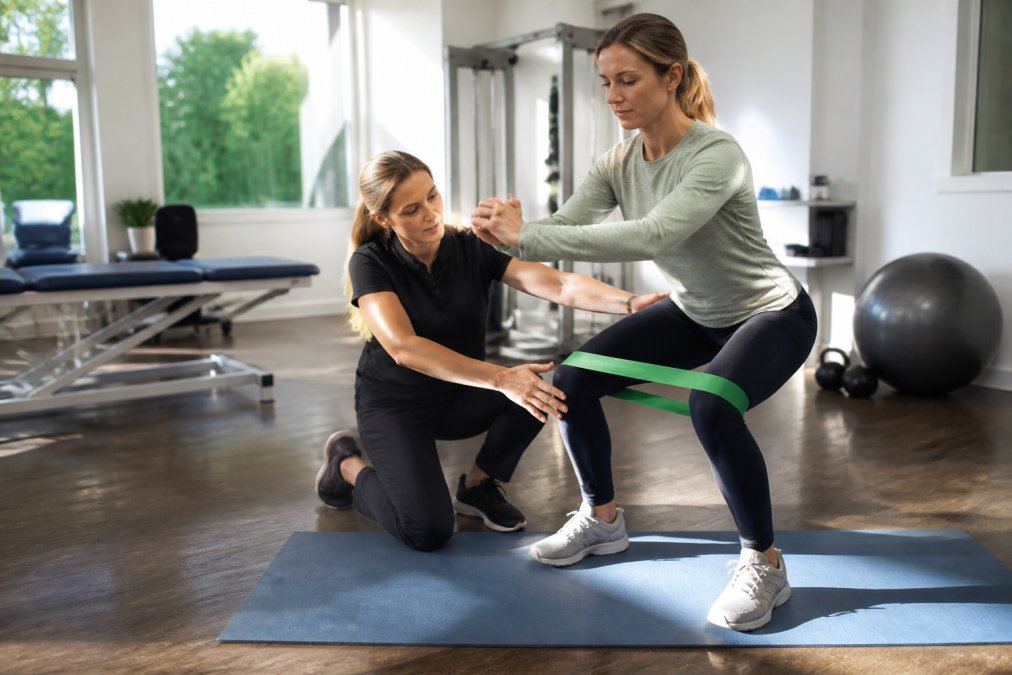
Quadriceps Strengthening Exercises
Your quadriceps stabilize your knee and reduce joint stress. This is why quadriceps strengthening is often the first step in managing persistent knee pain.
Straight Leg Raises
Sit on a firm chair with your back against the backrest. Straighten one leg in front of you, hold 2-3 seconds, then lower slowly without touching the ground. Do 10-15 repetitions per leg. Feel the front thigh muscle working, not knee pain.
Seated Knee Extensions
Sit upright in a chair. Straighten one leg, lift your foot off the ground, hold 1-2 seconds, then lower. Repeat 12-15 times per leg. Add a light resistance band around your ankle for more challenge.
Wall Squats
Stand with your back against a wall and slide down until knees bend at 45 degrees.
Quadriceps strength directly reduces knee pain because strong quads stabilize the joint and absorb shock during movement.
Hamstring Stretches and Curls for Knee Support
Tight hamstrings pull on your knee and change leg tracking. Stretching and strengthening hamstrings is essential for persistent knee pain relief.
Hamstring Stretch
Lying Hamstring Curls
Standing Hamstring Curl
Low-Impact Exercises for Bad Knees
When your knee hurts, high-impact activities like running or jumping make things worse. Low-impact exercises for bad knees let you stay active without stressing the joint.
Walking
Stationary Cycling
Swimming or Water Walking
Elliptical Machine
Avoid treadmill running if you have persistent knee pain. The repetitive pounding can aggravate inflammation and delay healing.
Knee Strengthening Exercises for Chronic Pain
Chronic knee pain often improves with consistent strengthening. These exercises target the muscles that support your knee and reduce long-term pain.
Glute Bridges
Clamshells
Step-Ups
Isometric Quad Sets
Exercises to Avoid With Knee Pain
Some exercises make persistent knee pain worse. Understanding what to avoid is just as important as knowing what to do.
Deep Squats and Lunges
Running and Jumping
Leg Press Machine
Heavy Leg Curls and Extensions
Kneeling Exercises
Pain during exercise is a signal to stop. Mild soreness the next day is normal, but sharp pain during movement means you should modify or skip that exercise.
Recovery Protocols and Progression Tracking
Recovery is where healing happens. How you care for your knee between workouts matters as much as the exercises themselves.
Post-Exercise Recovery: Ice, Heat, and Compression
When to Ice
Ice is most effective in the first 24-48 hours after a workout if your knee feels swollen, warm, or irritated. Apply ice for 15-20 minutes immediately after exercise (Is it time to put traditional cold therapy in rehabilitation of soft-tissue injuries out…). Wrap ice in a thin towel, elevate your leg on a pillow, and remove immediately if skin turns bright red or feels numb.
When to Use Heat
Compression and Elevation
Managing Flare-Ups
A flare-up is a sudden increase in pain or swelling, often triggered by doing too much too soon. Stop immediately, ice for 20 minutes, rest 1-2 days, compress and elevate, then return gradually at 50% intensity. Identify the trigger and adjust your program to prevent recurrence.
Tracking Your Progress
Keep a simple log: date, exercises, reps/hold times, resistance, knee pain (0-10 scale), next-day swelling, and mood. Progress tracking reveals patterns, which exercises cause flare-ups and when pain decreases, helping you make informed adjustments.
Progression Guidelines: The Safe Intensity Ramp
Progression means gradually increasing the challenge of your exercises. Too much progression too fast causes flare-ups and setbacks. Too little progression means your muscles plateau and pain doesn’t improve.
| Stage | Timeline | Focus | How to Progress |
|---|---|---|---|
| Early | Weeks 1-2 | Establish baseline, learn proper form, reduce acute pain | Increase reps by 2-3 per session (e.g., 10 reps → 12 reps → 15 reps) |
| Intermediate | Weeks 3-6 | Build strength, improve stability, reduce daily pain | Add resistance band; increase hold times by 5 seconds; add one extra set |
| Advanced | Weeks 7+ | Functional strength, return to activities, prevent re-injury | Increase resistance band tension; add balance challenges (e.g., single-leg stance); increase frequency to 4-5 days per week |
Frequency and Rest Days
Muscles adapt during rest, not exercise. Avoid high-intensity work on consecutive days. Recommended frequency: Weeks 1-2, 3 days per week; Weeks 3-6, 3-4 days per week; Weeks 7+, 4-5 days per week with one full rest day. Light activity like walking or stretching on rest days is fine.
Psychological Recovery: The Overlooked Factor
Persistent knee pain creates mental fatigue. Celebrate small wins, expect setbacks as learning opportunities, connect with others in support groups, and track mood alongside pain. Consistent exercise often improves overall mood and energy, not just your knee.
Recovery is not passive rest, it’s active management of inflammation, strategic progression, and attention to both body and mind. The difference between people who recover from persistent knee pain and those who don’t is often not the exercises themselves, but how well they manage recovery between workouts.
Frequently Asked Questions
Can knee pain actually be fixed with exercise?
Exercise can significantly reduce persistent knee pain and improve function for many people, though outcomes depend on the underlying cause. Strengthening the quadriceps and hamstrings, improving range of motion, and addressing muscle imbalances help stabilize the knee joint and reduce stress on cartilage and surrounding tissues. Consistency matters more than intensity, regular, gentle exercise often outperforms sporadic intense activity. However, some conditions may require professional evaluation to rule out structural damage or other issues requiring different treatment approaches.
What are the most common mistakes that make persistent knee pain worse?
Common mistakes include pushing through sharp pain rather than distinguishing between discomfort and injury, skipping warm-ups before exercise, progressing too quickly without building foundational strength, and ignoring muscle imbalances in the hip and thigh. Many people also avoid all activity, which can lead to stiffness and weakness. Exercising on hard surfaces without support, wearing unsupportive footwear, and failing to address alignment issues in daily movement patterns also contribute to persistent pain. Recovery between sessions is equally important, inadequate rest prevents adaptation and can worsen inflammation.
How do low-impact exercises for bad knees differ from regular strengthening?
Low-impact exercises for bad knees minimize stress through the joint while still building strength and range of motion. These include water-based activities, stationary cycling, and isometric holds that don’t require repetitive bending or impact. Regular strengthening may involve weight-bearing movements that, while effective, can aggravate acute pain. Low-impact options allow you to maintain fitness and progress strength without triggering inflammation, making them ideal for early recovery phases or flare-ups. As pain decreases and stability improves, you can gradually introduce more demanding variations.
How quickly should I see improvement from doing these exercises?
Many people notice reduced pain and improved mobility within 2-4 weeks of consistent exercise, though individual timelines vary based on pain severity, underlying cause, and adherence to the program. Initial improvements often come from reduced inflammation and improved proprioception rather than muscle growth. Meaningful strength gains typically develop over 6-8 weeks. Progression tracking, noting pain levels, range of motion, and functional improvements like climbing stairs, helps you recognize progress that may not be obvious day-to-day. If pain worsens or shows no improvement after 3-4 weeks of proper form and consistent effort, professional evaluation is recommended.