
Table of Contents
- Step 1: Identify What’s Causing Your Chronic Hip Pain
- Step 2: How Physical Therapy for Hip Pain Targets the Root Cause
- Step 3: Exercises to Improve Hip Mobility and Range of Motion
- Step 4: Hip Stability Exercises for Pain Relief That Lasts
- Step 5: Sleep Positions and Ergonomics That Support Hip Health
- Step 6: Anti-Inflammatory Nutrition and Pain Management Strategies
- Frequently Asked Questions
Last Updated: September 17, 2026
Step 1: Identify What’s Causing Your Chronic Hip Pain
Chronic hip pain lingers for weeks or months and rarely comes from one source. At Neuromuscular Strategies, we have over 30 years of experience. (Source: a 2026 report on musculoskeletal conditions)
Common Causes: Bursitis, Impingement, and Osteoarthritis
Hip bursitis is inflammation of the fluid-filled sac cushioning the joint, flaring with side-sleeping and prolonged standing.
- Pain on the outside of the hip: often bursitis or gluteal tendons
- Pain in the groin: often impingement or osteoarthritis
- Pain that radiates down the leg: often the lower back, not the hip
When to Get an Orthopedic Evaluation
See a doctor if pain lasts over two weeks, wakes you at night, or comes with swelling, fever, or a recent fall. An orthopedic evaluation rules out fracture, infection, and nerve involvement before you exercise.
Step 2: How Physical Therapy for Hip Pain Targets the Root Cause
Physical therapy for hip pain treats the cause, not the symptom. A therapist assesses how you walk, squat, and rotate, then builds a plan around what’s weak or stiff.
What a Movement Screening Reveals
A movement screening is a short series of guided tests showing how your hip, pelvis, and lower back work together. It catches things you can’t feel, like one hip rotating less than the other or a glute that isn’t firing.
Typical findings include:
- Limited hip extension on one side
- Poor pelvic alignment during walking
- Weak gluteal muscles on the painful side
- Compensating with the lower back instead of the hip
A common mistake is stretching a muscle that’s already loose while ignoring the weak one next to it. The hip usually needs stability training more than extra flexibility.
Step 3: Exercises to Improve Hip Mobility and Range of Motion
Exercises to improve hip mobility work best daily, ten focused minutes beats one long session.
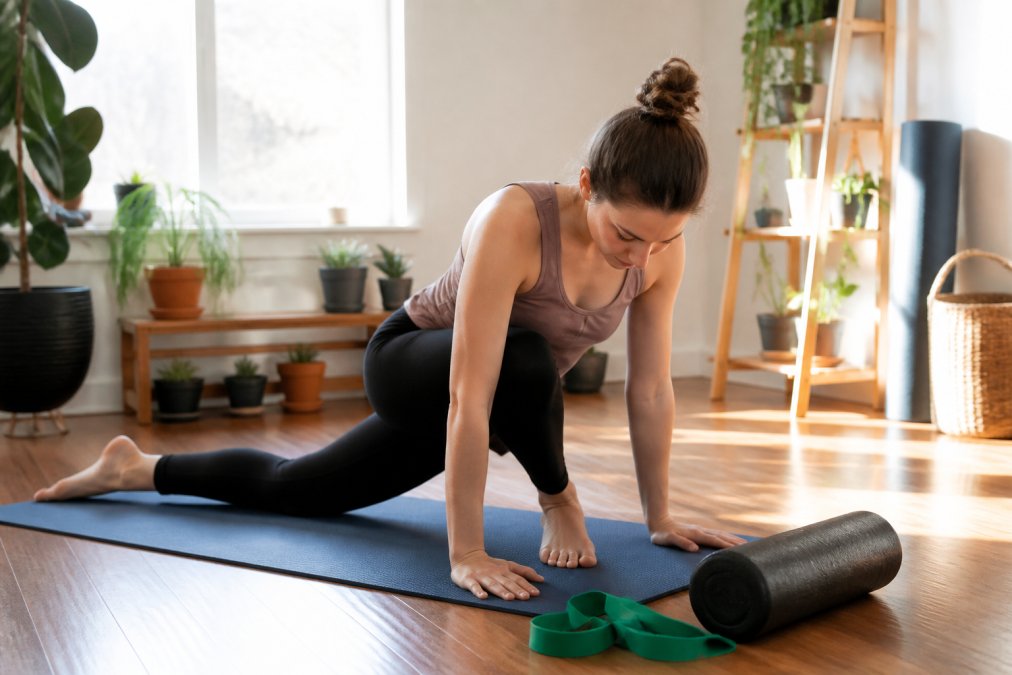
Start gently: push into mild stretch, never sharp pain.
A Simple Daily Stretching Routine
Try this five-move routine, holding each for 30 seconds:
- Hip flexor stretch (half-kneeling): 30 seconds per side
- Figure-4 glute stretch (on your back): 30 seconds per side
- 90/90 hip rotation: 8 slow reps per side
- Cat-cow: 10 slow reps
- Standing hip circles: 10 each direction
Do this once each morning. If pain spikes, back off and check with a therapist.
Step 4: Hip Stability Exercises for Pain Relief That Lasts
Hip stability exercises for pain build the muscles that hold the joint in place. Mobility without stability just moves the problem around.
- Clamshells: 2 sets of 12 per side
- Glute bridges: 2 sets of 10, hold 3 seconds at the top
- Side-lying leg lifts: 2 sets of 10 per side
- Bird-dog: 2 sets of 8 per side
- Standing hip abduction with band: 2 sets of 12 per side
Skipping stability work is the most common reason hip pain returns. Mobility gains fade within weeks if the surrounding muscles can’t support the new range.
Step 5: Sleep Positions and Ergonomics That Support Hip Health
Sleep position and daily ergonomics affect hip pain more than most people realize. You spend roughly a third of your life in bed and, for desk workers, most waking hours seated, which explains why a joint fine at noon aches by 3 a.m.
How to Sleep With Chronic Hip Pain
The goal is a neutral hip, not flexed, twisted, or compressed against the mattress.
- Sleep on the side that does not hurt when you can. On the painful side, the knee pillow matters even more.
- Place a firm pillow between your knees and pull it down between the knees and ankles; a pillow reaching only the knees lets the top leg drop, tilting the pelvis and pressing the top hip into the mattress.
- Stack a second pillow under your head so neck, spine, and hips stay aligned; a flat pillow rolls the trunk forward.
- Hug a body pillow in front. It stops you rolling onto your stomach, the position that most aggravates hip impingement.
Back sleepers:
- Put a pillow or rolled towel under the knees to flatten the lower back and take the hip flexors off stretch, reducing pull on the front of the hip.
- Keep legs slightly apart with a small pillow between the ankles if your hips feel pinched.
Stomach sleepers:
- The worst position for the hip, forcing one hip into rotation for hours. If you can’t switch, put a pillow under your pelvis so the lower back doesn’t sag, and keep one leg bent to the side.
Mattress and pillow specifics:
Schedule a Free 15′ Consultation call →
- A medium-firm mattress supports the pelvis without letting the hips sink; too soft lets the top hip drop, too firm creates pressure points on the bursa.
- Memory foam conforms but traps heat, waking you into bad positions; latex or hybrid holds alignment better for side sleepers.
- Replace a sagging mattress, most people notice the difference within a week.
- A knee pillow should be firm enough to hold its shape; soft down compresses to nothing by morning.
If you wake with hip pain that fades within 30 minutes of getting up, the mattress or your sleep position is likely the trigger. If the pain is still there at lunchtime, the cause is probably elsewhere.
Workplace Ergonomics for Hip Health
Sitting isn’t automatically bad for the hip, sitting the same way for hours is. The joint needs regular range of motion to stay lubricated and keep hip flexors from shortening.
Chair setup:
- Set seat height so hips and knees are at roughly 90 degrees, feet flat. If your feet dangle, the chair is too high and hip flexors stay shortened.
- Keep the seat pan deep enough to support your thighs but not so deep it presses behind the knees.
- Use adjustable lumbar support; a collapsed lower back pulls the pelvis into a posterior tilt, changing how the hip socket loads.
- Avoid sitting on a back-pocket wallet, which tilts the pelvis and creates hours-long asymmetry.
Standing desks:
- A standing desk helps only if you alternate; standing all day loads the hip differently and can aggravate bursitis.
- A common pattern is 30 minutes seated, 15 to 20 minutes standing, repeated through the day, use a timer or reminding desk.
- When standing, put one foot on a low stool and switch sides every few minutes so the hip doesn’t lock into one position.
- Wear supportive shoes on hard floors; thin-soled flats on concrete send more load up through the hip.
Movement breaks:
- Stand and move every 30 to 45 minutes; even 60 seconds to the water cooler resets the joint.
- Use the break for standing hip circles or a gentle hip flexor stretch.
- Take calls standing or walking when you can, the easiest way to add movement without adding time.
Driving and commuting:
- Slide the seat forward so knees sit slightly below hips, not above.
- Recline a few degrees so weight is on your sit bones, not your tailbone.
- On long drives, stop every 90 minutes to walk a few minutes.
| Problem | Fix | Why It Helps |
|---|---|---|
| Side-sleeping hip pressure | Firm pillow between knees and ankles | Keeps hips aligned and stops the top leg from dropping |
| Stomach sleeping | Body pillow in front, or pillow under pelvis | Prevents prolonged hip rotation |
| Sagging mattress | Medium-firm hybrid or latex | Supports the pelvis without pressure points |
| Prolonged sitting | Move every 30-45 min | Reduces joint stiffness and hip flexor shortening |
| Chair too high | Feet flat, hips and knees at 90 degrees | Keeps hip flexors from staying shortened |
| Standing all day | Alternate sit and stand, foot on a stool | Avoids loading the bursa in one position |
| Wallet in back pocket | Move it to a front pocket or bag | Prevents pelvic tilt and asymmetry |
Step 6: Anti-Inflammatory Nutrition and Pain Management Strategies
Anti-inflammatory nutrition supports joint health but is not a cure. Food can manage chronic discomfort and lower background inflammation, but it won’t fix a torn tendon or a bone-on-bone joint.
What an Anti-Inflammatory Plate Looks Like
The pattern most common in joint-health research is close to a Mediterranean-style diet: plenty of vegetables and fruit, whole grains, olive oil as the main fat, fish and poultry over red meat, and limited processed food.
A practical approach:
- Build meals around vegetables, fruit, and lean protein; aim for half the plate to be plants.
- Choose olive oil over butter where you can, extra-virgin olive oil contains polyphenols that may lower inflammation.
- Add fatty fish two to three times a week; salmon, sardines, mackerel, and tuna are high in omega-3s.
- Use turmeric and ginger in cooking; both have a long history of use for joint discomfort.
- Choose whole grains over refined ones; refined grains and added sugar raise blood sugar, linked to more inflammation over time.
- Limit processed meats, fried food, and sugary drinks, the biggest offenders in most diets.
- Stay hydrated; cartilage and the synovial fluid lubricating the hip are mostly water.
Supplements: What the Evidence Supports
Supplements are no substitute for a good diet or medical care, but a few have enough track record that many practitioners discuss them:
- Omega-3 fatty acids (fish oil): The most studied option for joint discomfort. Typical doses discussed are 1 to 3 grams of combined EPA and DHA daily. Check with a doctor first if you take blood thinners.
- Turmeric (curcumin): Often paired with black pepper or a formulated extract to improve absorption. Evidence is mixed but generally favorable for knee and hip osteoarthritis symptoms.
- Vitamin D: Low levels are common and linked to more joint pain; a blood test is the only way to know if you need it.
- Glucosamine and chondroitin: Popular, but evidence for hip osteoarthritis specifically is weak. Some report benefit; many do not.
Supplements can interact with prescription medications, including blood thinners and diabetes drugs. Tell your doctor and pharmacist about everything you take, including over-the-counter products.
Pain Management: A Layered Approach
Chronic pain isn’t a single signal, it’s the joint, the nerves, the muscles guarding it, and the brain’s interpretation. That’s why one strategy rarely works alone.
Non-drug options to combine:
- Gentle movement: Walking, swimming, or stationary cycling 10 to 20 minutes most days keeps the joint lubricated and reduces stiffness.
- Heat or ice: Heat before activity to loosen stiff muscles; ice after activity or during a flare to calm inflammation. Most people find one works better for them.
- Topical creams: OTC analgesics like menthol or capsaicin can take the edge off without systemic side effects.
- Over-the-counter medication: NSAIDs like ibuprofen or naproxen quiet a flare but don’t restore range of motion or strength. Use them as a bridge, not a plan; long-term use carries stomach, kidney, and heart risks.
- Stress reduction: Chronic pain and anxiety feed each other; slow breathing, meditation, and good sleep can lower how much pain you feel.
- Pain science education: Understanding why the hip hurts, and why pain doesn’t always equal damage, reduces fear and helps you move more, which reduces pain.
When to escalate:
- If pain isn’t improving after several weeks of consistent self-care, ask about physical therapy.
- If therapy isn’t enough, ask about corticosteroid injections, which calm a flare for weeks to months but don’t change the underlying condition.
- If the joint is severely damaged, hip replacement is highly effective for many people, major surgery, but one of the most reliable pain-relieving operations in medicine.
| Problem | Fix | Why It Helps |
|---|---|---|
| Morning stiffness | Gentle mobility routine | Restores range of motion |
| Weak glutes | Stability exercises 3x/week | Supports the joint |
| Stress-driven pain | Breathing and education | Calms pain signals |
| Flare-up | Heat before, ice after, short NSAID course | Reduces inflammation and stiffness |
| Poor diet | Mediterranean-style plate, fatty fish 2-3x/week | Lowers background inflammation |
| Low vitamin D | Blood test, supplement if needed | Supports joint and bone health |
Frequently Asked Questions
What is the best treatment for chronic hip pain?
There is no single best treatment because chronic hip pain has different causes, including hip bursitis, osteoarthritis, and hip impingement. A combination of physical therapy for hip pain, targeted mobility exercises, activity modification, and anti-inflammatory nutrition works well for many people. A movement screening can identify whether your pain comes from stiffness, weakness, or pelvic alignment issues, so your treatment plan addresses the actual cause rather than just the symptom.
What exercises are safe for fixing chronic hip pain?
Low-impact exercises that improve hip mobility and stability are generally safe for chronic hip pain. Examples include glute bridges, clamshells, standing hip abduction with a resistance band, and gentle hip flexor stretches. Start with a range of motion that feels comfortable and avoid pushing into sharp pain. A physical therapist can tailor hip stability exercises for pain to your specific stability and mobility patterns, especially if you have osteoarthritis or hip impingement.
How can physical therapy help with long-term hip discomfort?
Physical therapy for hip pain addresses the underlying movement patterns that keep the hip joint irritated. A therapist uses movement screening to check pelvic alignment, gluteal muscle strength, and hip flexor flexibility. From there, a customized program combines stretching and progressive strengthening. Research supports physical therapy as a non-surgical treatment that can reduce chronic discomfort and improve functional movement for daily activities.
When should I see a professional for persistent hip pain?
See a professional if hip pain lasts more than two to three weeks, limits your walking or sleep, or comes with swelling, numbness, or loss of range of motion. An orthopedic evaluation can rule out fractures, advanced osteoarthritis, or other conditions that need medical imaging. Early physical therapy often prevents chronic discomfort from becoming a long-term problem, so schedule a consultation rather than waiting for the pain to resolve on its own.