
Table of Contents
- Common Types of Skiing Injuries and Immediate Recognition
- First Aid: The RICE Protocol and Initial Response
- When to Seek Professional Medical Attention
- ACL Recovery Timeline for Skiers
- How to Return to Sport After Shoulder Surgery
- Skiing Injury Prevention Exercises and Mobility Work
- Recovery Essentials: Rest, Nutrition, Hydration, and Mental Health
- Frequently Asked Questions
Last Updated: October 4, 2026
Common Types of Skiing Injuries and Immediate Recognition
Skiing stresses your knees, shoulders, and wrists. The most common injuries fall into a few clear categories.
Knee injuries dominate the skiing injury landscape: ACL tears (twisting with foot planted), MCL sprains (inside of knee), and meniscus tears (cartilage damage). All require immediate attention.
Shoulder injuries are the second most common: dislocations, rotator cuff strains from falls, and collarbone fractures.
Wrist and ankle injuries include sprains and fractures. Early recognition speeds recovery.
How do you know if you have a serious injury? Look for these signs:
- Immediate swelling or bruising
- Severe pain that doesn’t improve with rest
- Inability to move the joint
- Visible deformity
- Numbness or tingling below the injury
- Feeling of instability or “giving way”
At Neuromuscular Strategies, we help individuals understand their injuries and create a clear path to recovery.
First Aid: The RICE Protocol and Initial Response
The RICE protocol (Rest, Ice, Compression, Elevation) reduces inflammation and pain in the first 48 hours after a skiing injury.
Rest means stopping activity immediately and avoiding use of the injured area.
Ice reduces swelling for 15-20 minutes at a time, several times daily (use a cloth to prevent frostbite). Most effective in the first 24-48 hours.
Compression limits fluid buildup. Wrap snugly with an elastic bandage without cutting off circulation.
Elevation reduces swelling by keeping the injured area higher than your heart, especially for the first few days.
Many skiers make the mistake of applying heat too early. Heat increases blood flow and swelling. Save heat therapy for after the acute swelling phase ends, usually after 48 hours.
Immobilize the injured area with a sling (shoulder) or crutches (knee/ankle) while inflammation decreases.
Over-the-counter anti-inflammatory medications can help; follow package directions and never exceed recommended doses.
When to Seek Professional Medical Attention
Seek immediate medical evaluation for: severe pain unresponsive to rest and ice, inability to bear weight, visible deformity, spreading numbness/tingling, worsening swelling, progressive loss of range of motion, or persistent joint instability.
Seek care within 24 hours for moderate injuries (significant sprains, muscle strains, minor fractures) to rule out serious damage and begin proper recovery.
Home care often works for mild injuries, but seek evaluation if symptoms don’t improve within a few days.
An orthopedic assessment using X-rays or MRI scans distinguishes between sprains and complete tears, shaping your plan to recover from skiing injuries.
Ignoring a serious skiing injury can lead to chronic instability. A knee that feels “loose” after an ACL tear won’t tighten up on its own. Without proper rehabilitation, you risk re-injury and long-term joint damage.
ACL Recovery Timeline for Skiers
An ACL tear is one of the most serious skiing injuries. Understanding the recovery timeline helps you set realistic expectations.
The acute phase (first two weeks): swelling peaks around day three. Focus on reducing inflammation and protecting the knee with RICE protocol.
The early rehabilitation phase (weeks 2-6): swelling decreases, physical therapy begins with gentle range of motion to restore basic knee function.
The intermediate phase (weeks 6-12): strength training intensifies with quadriceps and hamstring rebuilding, plus balance and proprioception work.
The late rehabilitation phase (weeks 12-6 months): sport-specific training, agility drills, and cutting work prepare your knee for skiing demands.
Return to skiing typically takes six to nine months for a complete ACL tear, depending on age, fitness level, and rehabilitation commitment.
ACL recovery isn’t linear. You’ll have good days and setbacks. This is normal. Consistency matters more than speed. Rushing recovery increases your risk of re-injury.
How to Return to Sport After Shoulder Surgery
Shoulder surgery requires careful, progressive rehabilitation to avoid re-injury.
The first phase (weeks 1-4): arm in sling, passive range of motion exercises, pain control focus.
The second phase (weeks 4-8): active range of motion, light daily tasks.
The third phase (weeks 8-12): light strengthening with resistance bands, controlled pain-free movement.
The fourth phase (weeks 12-16): increased resistance, sport-specific drills. (Source: American Academy of Orthopaedic Surgeons (AAOS) information on knee injuries)
The fifth phase (weeks 16-6 months): return to sport, starting on easy terrain and progressing as confidence and strength improve.
Return to skiing after shoulder surgery typically takes four to six months, with full recovery taking up to a year.
Skiing Injury Prevention Exercises and Mobility Work
Strong muscles protect your joints during skiing. The most effective pre-season routine combines strength, balance, and mobility work for 8-12 weeks before ski season.
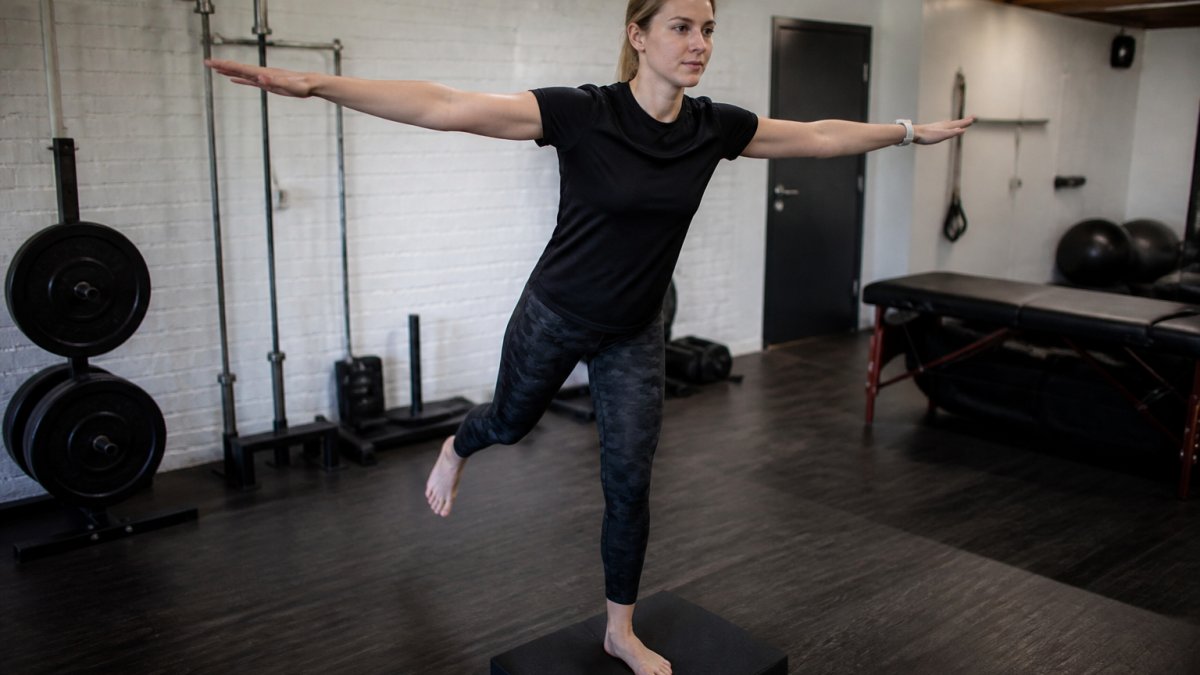
Quadriceps and knee stability prevent ACL injury. Your quadriceps controls inward knee collapse during turns.
- Single-leg squats: 3 sets of 8-12 reps per leg, twice weekly.
- Bulgarian split squats: 3 sets of 10-12 reps per leg, twice weekly.
- Terminal knee extensions with a resistance band: 3 sets of 15 reps per leg, three times weekly.
- Step-ups: 3 sets of 12 reps per leg, twice weekly.
Hamstring endurance balances quadriceps strength and reduces ACL injury risk.
- Romanian deadlifts: 3 sets of 8-10 reps, twice weekly.
- Nordic hamstring curls: 3 sets of 5-8 reps, once weekly.
- Hamstring curls (machine or prone): 3 sets of 12-15 reps, twice weekly.
- Glute bridges and single-leg glute bridges: 3 sets of 12-15 reps per leg, twice weekly.
Glute activation and hip stability prevent knee valgus (inward collapse) during turns.
- Clamshells: 3 sets of 15 reps per side, three times weekly.
- Side-lying leg raises: 3 sets of 12-15 reps per side, twice weekly.
- Single-leg deadlifts: 3 sets of 8-10 reps per leg, twice weekly.
- Lateral band walks: 3 sets of 12 steps per direction, twice weekly.
Ankle stability and proprioception prevent sprains and improve balance.
- Single-leg balance on firm ground: 30-60 seconds, three times per leg, daily.
- Single-leg balance on unstable surfaces: 3 sets of 30-60 seconds per leg, three times weekly.
- Lateral ankle mobility: 30 seconds per side, daily.
- Calf raises on one leg: 3 sets of 12-15 reps per leg, twice weekly.
Shoulder stability prevents rotator cuff injuries and dislocations.
- Band pull-aparts: 3 sets of 15 reps, three times weekly.
- Face pulls: 3 sets of 12-15 reps, three times weekly.
- Wall slides: 3 sets of 10-12 reps, twice weekly.
- Prone Y-T-W raises: 2 sets of 8-10 reps in each position, twice weekly.
- Scapular push-ups: 3 sets of 10-12 reps, twice weekly.
Flexibility and range of motion matter as much as strength. Use dynamic stretching before activity and static stretching after.
- Hip flexor stretches: 30 seconds per side, daily.
- Hamstring stretches: 30 seconds per leg, daily.
- IT band foam rolling: 60-90 seconds per leg, two to three times weekly.
- Thoracic spine mobility: 30 seconds, 5-10 reps, three times weekly.
Periodization matters. Weeks 1-4: foundational strength and mobility. Weeks 5-8: add complexity and balance. Weeks 9-12: sport-specific movements.
The best prevention routine is the one you’ll actually do consistently. Start with 2-3 exercises per muscle group, done twice weekly. Build consistency for 4 weeks before adding volume. A simple routine done every week beats a complex routine you skip. Most skiers who prevent injuries do so because they commit to a routine 8-12 weeks before season, not because they do something extraordinary.
Recovery Essentials: Rest, Nutrition, Hydration, and Mental Health
Physical recovery depends on more than just exercise. Rest, nutrition, hydration, and mental health form the foundation of healing.
Sleep is when your body repairs itself. Aim for seven to nine hours nightly. Create a dark, cool room and avoid screens before bed. Growth hormone and inflammation-reducing cytokines are released during deep sleep, so prioritize sleep quality.
Nutrition fuels recovery. Eat protein (lean meats, fish, eggs, legumes), whole grains, and plenty of fruits and vegetables. Anti-inflammatory foods like fatty fish, berries, leafy greens, and olive oil may reduce pain and swelling.
Hydration supports every function. Water helps reduce inflammation and transport nutrients. Drink enough so your urine is pale yellow. During rehabilitation, especially at high altitude or in dry climates, you may need more water than usual. Dehydration slows healing and increases pain perception.
Mental health impacts physical recovery more than many skiers realize. Skiing injuries often bring frustration, anxiety, and identity loss. You’re missing your favorite activity. Your confidence takes a hit. Your social circle may revolve around skiing.
Research shows that skiers with high anxiety about re-injury have slower rehabilitation progress and higher rates of re-injury after return to sport. This is not weakness; it’s a documented pattern. Addressing the psychological side of injury is as important as doing your physical therapy exercises.
Fear of re-injury is the most common mental barrier. After an ACL tear or shoulder dislocation, your brain learns that certain movements are dangerous. This protective response made sense when you were injured, but it can persist long after healing is complete.
To address this:
- Reframe your injury narrative. Instead of “My knee is broken and fragile,” think “My knee was injured, I’ve completed rehabilitation, and I’m now rebuilding strength and confidence.” This shift from fixed damage to progressive recovery reduces anxiety.
- Use graded exposure. Don’t jump straight back to steep terrain. Start on flat, gentle slopes. Do short runs. Gradually increase difficulty as your confidence grows alongside your strength. This teaches your nervous system that the movement is safe.
- Practice visualization. Spend 5-10 minutes daily imagining yourself skiing smoothly and confidently on terrain slightly easier than your current level. Visualization activates the same neural pathways as physical practice and builds confidence without physical risk.
- Track small wins. Keep a simple log of what you accomplished each week: “Did 10 single-leg squats without pain,” “Walked 2 miles without limping,” “Skied a green run without anxiety.” Reviewing these wins combats the feeling that recovery is stalled.
Frustration and impatience are normal but dangerous. Many skiers try to accelerate recovery by pushing too hard, too fast. This often leads to re-injury or chronic pain. Set realistic milestones with your physical therapist. Celebrate small progress. You might not be back on the mountain next month.
Social support matters. Isolation during injury recovery worsens anxiety and depression. Stay connected to your skiing community even if you’re not skiing. Watch ski videos. Go to the mountain to watch friends ski. Join online communities of injured skiers.
Consider professional mental health support. A sports psychologist or therapist familiar with athletic injury can teach you coping strategies, help you process the identity loss of being sidelined, and address anxiety about return to sport.
Return-to-sport anxiety is real and common. Even after you’re physically cleared to ski, you may feel afraid. Your first runs back may feel harder mentally than physically. This is normal. Start on easy terrain. Ski with a trusted friend. Take breaks. Build confidence gradually.
Recovery is a marathon, not a sprint. Your mindset determines your success as much as your effort. Stay patient. Trust the process. You will get back to skiing. If anxiety or depression is interfering with your recovery, reach out to a mental health professional. This is part of recovery, not a detour from it.
Frequently Asked Questions
What are the most common skiing injuries, and how do I know if I need immediate medical attention?
The most common skiing injuries include ACL tears, MCL sprains, meniscus damage, and shoulder dislocations. Seek immediate medical attention if you experience severe pain, visible deformity, inability to bear weight, or signs of bone fracture. Ligament sprains and muscle strains typically cause swelling and limited range of motion but may be managed with initial RICE protocol and professional assessment within 24-48 hours.
How long does ACL recovery take for skiers, and when can I return to the mountain?
ACL recovery timelines vary significantly based on injury severity and whether surgery is needed. Non-surgical cases may take 3-6 months with proper rehabilitation, while surgical reconstruction typically requires 6-12 months of progressive physical therapy. Return-to-sport decisions depend on achieving full range of motion, quadriceps strength, glute activation, and joint stability through functional testing. Your physical therapist will determine readiness through objective measures, not calendar dates alone.
What exercises should I do after a skiing injury to prevent re-injury?
Post-injury prevention exercises focus on restoring joint stability, improving proprioception, and rebuilding muscular endurance. Common protocols include single-leg balance work, foam rolling for soft tissue mobility, hamstring and quadriceps strengthening, glute activation exercises, and controlled range of motion drills. These exercises address biomechanics and circulation while reducing chronic pain risk. A personalized physical therapy program tailors these based on your specific injury and movement patterns.
How does shoulder surgery recovery differ from other skiing injuries?
Shoulder surgery recovery follows a phased approach: acute phase (weeks 1-6) focuses on protection and gentle range of motion, intermediate phase (weeks 6-12) emphasizes mobility and light strengthening, and advanced phase (months 3-6) builds functional strength and sport-specific movement. Unlike ligament sprains managed with RICE alone, post-surgical rehabilitation requires progressive loading under professional guidance. Return-to-sport timelines typically extend 4-6 months, with emphasis on rotator cuff stability and scapular mechanics before high-demand activities.